Congregation Kehillath Israel

Congregation Kehillath Israel

Congregation Kehillath Israel

Congregation Kehillath Israel

tzion
Home Archive by Category "tzion"

Category: tzion

archivenewstzion
December 6, 2017

We want failures

We want failures

Today’s visit with the Chief of Security at Ben Gurion Airport was enlightening.  It deepened our appreciation for what it takes to keep Israel’s airport the world’s safest.  Our host told us that those under his command undergo some ten thousand Drills in an average year.  This prompted one of the members of our New England ADL Counterterrorism Delegation to ask, “What is your success rate with these Drills?”  He responded, “90%.  But we want failures.”

Success is a good congratulator.  But failure is a reliable educator.  Mistakes can be our most memorable teachers.  Two other features of Israel’s approach to airport security drive this home.  First, whenever a terrorist attack occurs at any airport in the world, an Israeli team arrives and invests considerable time into learning as much as possible from the incident.  Second, the average age of security personnel who interview us when we arrive at Ben Gurion is 23 or 24.  Each of them is highly skilled and highly motivated. More significantly, however, each is a student pursuing an advanced degree.

Strong learners make the best security professionals.  There is an average of four hundred cyberattacks on Israel’s airport each month.  More than outsmarting the bad actors, those responsible for preventing harm need to outpace them as learners.

In the 1960s, an executive at IBM made a decision that ended up losing the company $10 million dollars (over 120 million in 2017 dollars).  The CEO of IBM, Tom Watson, summoned the offending executive to his office.  As the executive cowered, Watson asked, “Do you know why I’ve asked you here?”  The man replied, “I assume I’m here so you can fire me.”  Watson looked surprised.  “Fire you?!  Of course not.  I just spent $10 million dollars educating you.”

May we make our mistakes into our teachers.  And may our lessons learned keep us safe and seed goodness for a growing world.

Rabbi William Hamilton

Image: Chief of Security at Ben Gurion International Airport briefs our Delegation
Image provided by Rabbi Hamilton
Read More
By congki
archivenewstzion
February 3, 2016

2 Minutes, 2 Hours, 2 Days, 2 Decades

At 2 pm this afternoon I was walking in Jerusalem to a meeting when three police vehicles raced past me en route to the Old City.  My heart saddened as I knew why.  Another attack.  Among the saddest dimensions of the terror attacks of the past six months is how routine they appear to have become.

Rapid Response to terrorist incidents, a quick return to normal life is one of the ways in which Israelis refuse to permit terrorists to disrupt the flow of daily life.  Within two minutes, the police seek to contain and secure the scene.  Within two hours, wounded are treated, deceased honorably transported, residents in the immediate area are communicated with, and the facts of what transpired are ascertained and disseminated internationally.  Two days is the average amount of time within which any funerals will take place, and the stories about the victims lives are at the forefront of national consciousness and conversation.

Our ADL Law Enforcement Counter-Terrorism mission met many highly capable Officers in the Israeli Police throughout our visit.  One such Officer was also a survivor of a horrific terror attack back in 2002. Sg. Major Ronit Tubul boarded a bus to go to work. At the next stop a suicide bomber got on and immediately blew up the bus. Ronit survived because she was ejected through the blown off roof. She spent nineteen days in a coma, survived multiple surgeries, and an extremely difficult and long recovery. She still trembles at the thought of boarding a bus.  Ronit’s courageous story which now finds her back on the job with the police, demonstrates that two decades is barely enough time to contain the trauma for a survivor of terrorism.
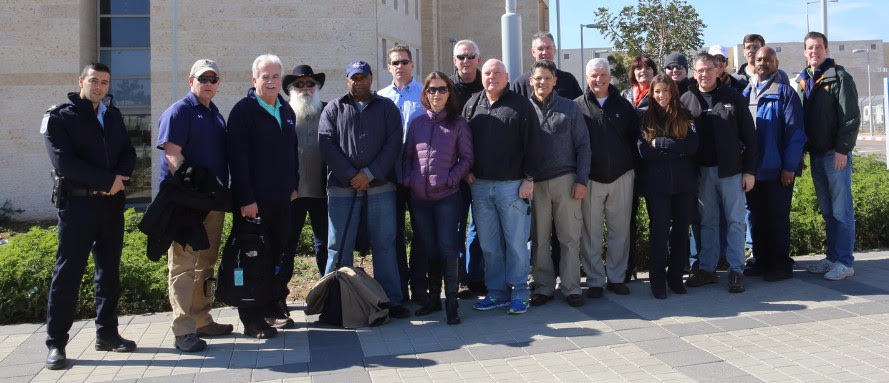
2 Minutes, 2 Hours, 2 Days, 2 Decades.  2 pm this afternoon in Jerusalem.  Anything but routine.

We have just learned that one of the three wounded in today’s attack outside the Old City has died, 19-year-old Israeli Policewoman Hadar Cohen.  The same age as our son Kobi, living in Jerusalem for the balance of this year, who just received an extra firm goodbye hug from his father.  Hadar had just joined the Israeli National Police (the hosts of our ADL Delegation) a mere two months ago.  May she rest in peace.

Rabbi William Hamilton

Image: At ADL Israel offices with Nurit Tubul, terror survivor and National Police Sgt. Maj.

Read More
By congki
archivenewstzion
February 2, 2016

To Plant or To Implant

Amos Oz in his book A Tale of Love and Darkness describes a rare moment of tenderness with his father in the wake of the 1947 United Nations vote to establish Israel.  His father whispered to his eight-year-old son about “what some hooligans did to him and his brother David in Odessa and what some Gentile boys did to him at his Polish School in Vilna, and the girls joined in too.” The next day when his Grandfather came to school to complain, the children set upon him and humiliated him too “and the girls laughed and made dirty jokes…while the teachers watched and said nothing, or maybe they were laughing too.” From that day on, Oz’s father promised, his son would never be bullied just because he was a Jew. “From tonight that’s finished here. Forever.”

Ever since then, we have continued to learn the painful truth that Israel’s security cannot guarantee personal safety.  Alas, educating toward hostility remains far too normative.

For example our ADL Counter-Terrorism delegation became aware of the painful implications of this just south of Jerusalem, within a neighborhood around the historic burial site of our biblical Matriarch Rachel.  We learned of a particularly alarming practice in the El Ida cemetery which is adjacent to Rachel’s resting place. Teens break apart headstones in order to throw chunks of stone over the security barrier to harm Jews coming to pray at Rachel’s headstone.  Of course our tradition encourages us to place a stone upon a grave to convey honor and love.  Sadly, infernal contempt leads some teens to desecrate their own family markers in order to attack psalm-praying pilgrims.

As our JNF funds flow into Israel to plant trees, too often external enemies channel funds in order to implant terror.  Rather than life-giving saplings that sing in the breeze,Wahabi ideology forests young hearts and minds with stormy designs.  Hope lies in the prospect of channeling resources toward revolutionary approaches that seed goodness-generating aspirations and habits.   Championing such approaches in the home, the school, and the prayer-space, may yet bring transfusions of promise.

Land is defended with an army.   Freedom is defended with education.  Dignity is defended with responsibility.


Rabbi William Hamilton

Image: Rabbi Hamilton outside the police academy

Read More
By congki
archivenewstzion
February 1, 2016

Hope and Normalization

Middle class homes, newer automobiles, steady tourism and a daily flow of residents into Jerusalem were among the things we observed when we enjoyed the rare privilege of being hosted by Palestinian Police Leadership in Bethlehem this past Wednesday as part of our ADL Counter-Terrorism Mission.  Although the Christian population is declining within the neighborhood where its religion’s founder was born, there are strong indications that Palestinians in Bethlehem and in similar cities under Palestinian control are taking more responsibility for their future by living, trading, and coordinating alongside their Israeli neighbors.

The contrast between these areas, exemplified byRawabi, the model middle-class city that will eventually become home to 30,000 Palestinians, and refugee dwellings – established in 1948 by the United Nations Work and Relief Agency which still provide health, education, and food to a third generation of Palestinians numbering today approximately 1.8 million –  could not be more dramatic. It is hard to imagine how developing a spirit of responsibility for one’s fate under such conditions is possible.  Yet such a spirit is now being modeled all over Palestinian cities like Bethlehem, Ramallah, and Jericho where the annual GDP continues to rise.

Mohammed Za’eir says, “I am from the city of Jenin. I want to open a market stall but the municipality isn’t letting me. Why did all the people here get permits? Because they get preferential treatment. All the people who bought from me know that I sell good merchandise, and that I give customers respect. I have four children and I just want to feed them.”

Progress is still fragile, very vulnerable to major ruptures in the security situation.  Yet more Rawabi model cities help harvest normalization.  Responsibility does indeed seed dignity.

Rabbi William Hamilton

Image: Rabbi Hamilton receives a gift from Colonel Ala Shalabi, Head of Bethlehem Police District

Read More
By congki
archivenewstzion
December 21, 2015

Ezra – May his memory bless

Observing the 30th day (sh’loshim) since the funeral of Ezra Schwartz offers a fitting time for reflection and action in his honor.

During his Shiva a few weeks ago, we had traveled around Israel with our son, Kobi, who was a good friend of Ezra.  This brought home a thickening bond between Israeli and North American Jewry.  Every Israeli from our waitress to our cab driver knew of Ezra at the very same time when the New England Patriots stood silent Stateside in his memory.

Yet there is a dramatic difference between the focus of each of our communities in response to terror.  In America we fascinate on the motivations of the murderers rather than delving into the lives and values of their victims.   Yes Israel is smaller and her victims are more intimately familiar.   But there is something telling about the notion that I know nothing about the identity of Ezra’s killer.  Yes the Nation State of the Jewish People no longer tries to decipher the ‘path to radicalization’ of those who seek to do her harm.  Yet even as understanding the path of the wicked can help to make it more crooked, still to explain does little more than make plain.   Far preferable for me is Ezra’s father, Ari’s image lovingly evoked at the funeral a month ago.  “I want them to think of Ezra with a great big smile on his face, flying through the air on (ski) jumps so big most of us could not imagine people flying so high.”

What our communities in North America and Israel do share is a determination to act in ways that honor those whose lives have been cut short.  One way to honor Ezra is to encourage and support gap-year study in Israel in his memory.

Many years ago Israel’s Chief Rabbinate established tomorrow’s 10th of Tevet as theyahrzeit for anyone who perished in the Holocaust whose precise date of death is unknown*.  The rabbis were careful to select an established Fast Day remote enough in the calendar from the summer’s Tisha B’Av observance and its accompanying self-criticism (because of our sins we were exiled).  The memory of every life should bless.

The news of Ezra’s murder struck at our world like a thunderclap.  Our ancestor Jacob in this week’s Torah portion touchingly recalls Rachel’s untimely death by emphasizing his personal responsibility “Rachel died by me” (meitah allai) (Gen. 48:7) to bury her without delay in the very same place where Ezra lost his life a month ago.  Let us honor Ezra’s ways as personally as we are comfortable, thus bringing comfort to his mourners and blessing to his memory.

Rabbi William Hamilton

*Special afternoon service Tuesday, December 22 in the Rabb Chapel at 4:00 pm.

Read More
By congki
archivenewstzion
November 12, 2015

Moral grounds

Our good friend Moshe Halbertal, an internationally respected ethicist and co-author of the Israeli army’s code of moral conduct, was heckled and verbally assaulted a week ago at the University of Minnesota Law School where he had been invited to deliver a lecture.  The IDF’s strict application of his standards in combat situations has probably saved hundreds of Palestinian lives in Gaza, the disputed territories, and Lebanon over the years.  Ironically, he was vilified for nearly an hour by dozens of protestors who shouted “baby killer” calling him a “war crimes apologist”.  His core identity as an Israeliappeared to be his ‘crime’.  The determined efforts to prevent him from speaking (he eventually did speak) points to an alarming escalation in hostility toward Israel on college campuses in North America.

Because Professor Halbertal is a moral philosopher, it feels altogether fitting to encourage that good friends of Israel look to engage his discipline – moral claims – more consistently.  Ordinarily we welcome moral critique because it can help us grow, bringing us to a higher plane.  Yet even when morally-based attacks seek to degrade Israel, here too, we can and should meet them on moral grounds.

Whenever Israel stands accused of wrongdoing, four morally-driven responses are available.  First, if the claim is fabricated or false, we need to discredit it.  Pleading guilty to imaginary sins is never a good idea.  When a claim does have credibility, a second ethically important response is to shed light on the context that may justify what has transpired.  As when President Lincoln in his Second Inaugural distinguished between those who made war and those who accepted war, the IDF is so often responding to blood-thirsty killers and terrorists.  Which alludes to a third response ofrealism.  The price of existence is clashes with those who seek to end your existence.  Finally, when mistakes are made, the moral response of restitution – regret, confession, and reparation – is required.  Rabbi Donniel Hartman, in framing these four approaches, indicates that often a blend of several of them needs to be marshaled together.

Last night our New England community celebrated our annual Friends of the IDF dinner, which coincided with Veterans Day and the new Hebrew Month of Kislev (in which Hanukkah will later occur).  Curiously, Veterans day gained formal recognition as a ‘November 11th National Holiday’ by an act of Congress in May of 1938.  The very same year, 77 years ago earlier this week, we remembered Kristallnacht and its shattering violence.  Alas, violence in today’s world requires strong deterrence.

The Israel Defense Forces are deeply moral.  Consider this remarkable personal testimony from the FIDF Dinner two years ago. This does it mean that they don’t make mistakes.  But the standards by which Israelis hold their own military should be a source of pride to all ‘friends of righteousness’.  Moshe Halbertal reminds us that we can go toe-to-toe on moral grounds with any nation on earth.  May this Rosh Hodesh(new month) signal a fresh readiness to do so.

Rabbi William Hamilton

Read More
By congki
archivenewstzion
October 15, 2015

Finding the words

My friend and colleague, Rabbi David Wolpe, captures sentiments that we may find resonant (from today’s Jewish Journal of LA).  I now share his words; “A friend in Israel writes, “Sometimes we feel as though no one in chul (chutz la’aretz — outside of the land) really understands what is happening here.”

She means the daily apprehension, the fear when you see your child walk out of the front door in the morning.  She means the knowledge that any passing car can become a ground missile, any disembarking passenger an avatar of death.  She further fears the knives wielded on streets will bring out the rhetorical knives as well: ones like the words of State Department Spokesman Admiral John Kirby, talking about how both sides have committed acts of terror.

What can I say to her; what can we say? How do we, who have chosen the buffeted safety of life outside the land, respond to those who live in Israel?  These are my words to Rena, to her children, to all our sisters and brothers who feel alone:

Jews across the world wake each morning with prayer and trepidation, the prayer borne of faith and the trepidation of love. The sacred cord ties us from Paris to Miami to Madrid to London to Los Angeles to Buenos Aires to Toronto to Kiev to New York, its origin in the energy of Jerusalem.

The world may not care to understand what it is to be surrounded by enemies, watchful and fearful, but we do.

Countries that associate with others  — the EU or NATO or ASEAN or Latin American States or OPEC cannot imagine what it is to belong to no club, to stand singular in the family of nations.  We remember the verse of Lamentations: “How the city sits solitary.”  There is one Jewish nation.  One.

When people forgive the catastrophic political culture around you, asking what can one expect of people who have never known democracy, believe me – we remember that the founders of Israel came from lands with czars and dictators and tyrannies and still managed to create a democracy.  We do not forget Israel’s roots, and we have not ceased to be amazed at them.

When your children are still at an age when girls and boys resist learning about the past, falling asleep in classes with dry recitations of dates and events, we know that you are haunting them with your history.  They learn at 6, 7, 8 years old that the strong arm of Israel has a number tattooed on it that will never disappear.  As one of your greatest writers has said, before Israeli children learn the facts of life, they learn the facts of death. We, your sisters and brothers, do not forget.

Your 17-year-olds who patrol the borders may be a symbol to some of brute strength.  To us, they are our children, barely discovering what life is, forced to carry a gun and make choices in split seconds that will save or doom lives.  On the evening they should be on a first date, they listen for sounds of terrorists in the night.

When you read in the Torah of Reuven, Gad and half of Menasseh – the tribes that Moses permitted to dwell outside the land – you may suppose that we no longer heed Moses’ admonition that the tribes must help fight for the land to earn the privilege of residing elsewhere.  Most of us have not forgotten.  We know there is a tax for not living in the land.

When pundits from all over the world, in the safety of their studios, question how you defend yourself, know that we trust you.  Do we ever question?  Of course.  We all think, argue, doubt, wonder.  But in the end, we trust you not only because you have survived the many storms, but because while families fight, they trust, and embrace.

So what do we offer you in your pain?  We will send money to support hospitals and soldiers and the wounded and bereaved and charities and schools.  We will speak up when the world assails you, judges and condemns you, dismisses your fears because they themselves do not wish to be afraid.  We will visit you and stand next to you.

But most of all, please know that we love you.  We love you not with the distant, easy affection that we give to people who do not impinge on our lives or disturb our sleep.  We love you, our Israeli brothers and sisters, with the soul rocking love that binds our fate and our destiny with yours, the love of family far away that does not forget.  We know that you would have us be there and instead we are here.  But also, please remember, we are here.”

Rabbi William Hamilton

Read More
By congki
archivenewstzion
July 23, 2015

Iran: Beyond Dismissiveness and Shouting

Iran: Beyond Dismissiveness and Shouting

This weekend’s observance of the 9th of Av reawakens the importance of facing failure.  More than the calendar’s saddest day that recalls the destruction of the First and Second Temples, the Tisha B’Av fast invites a confrontation with past moments of national failure.  The first two Commonwealths of Jewish history fall because of our sinful idolatry and infighting.   Fasting can be hard on the body, but it is good for the soul.  This is because a teaspoon of self-criticism is a virtue on the humble and responsible path toward growth.

America is a land of limitless possibilities where dreams are realized time and again. Yet it is also a place where facing our collective misdeeds does not come naturally.  A glaring example of the costs of avoiding national self-reckoning surrounds our historic and ongoing struggle with racism, captured most eloquently in the President’s Charleston eulogy, in Ta Nehisi Coates’ acclaimednew book, and this week in the terribly wrongful death of Sandra Bland.  A far more subtle example of the absence of such reflective reckoning surrounds the current debate over the nuclear containment deal with Iran.

Consider how supporters of the deal defend it.  Their core claims focus on limitations.  ‘This was not possible.  That cannot be unlearned.  Our current strategy was about to expire.  Diplomacy is safer than violence.  Iran’s next generation seeks a different future.  And, finally, anybody who doesn’t appreciate these realities is readying for war.’  This approach hardly inspires confidence due to its dismissiveness.  But, in the spirit of trying to be self-critical of my own assumptions, I will seek to give consideration to some of the points it makes.

First, we are being asked to listen better.  Specifically, we are urged to listen to what people around the world are saying.  Everybody knows how Israelis and Saudis feel about the deal.  What I find important, albeit difficult to absorb, is how few countries outside of Iran’s immediate neighborhood actually view today’s leading exporter of terrorism and destabilization as a serious threat.  Findings from a Pew poll conducted last week reveal that only three of the forty surveyed countries, Israel, Spain, and the United States, had more than 50% claiming Iran as major global threat.  Countries today consider ISIS, Climate Change, and Economic Instability to be much greater threats.  Again, as puzzling as the lack of alarm over Iran may be, ignoring it won’t make us safer.

Second, we should believe more in people.  Sponsors of the agreement believe that a next generation of Iranians seeks to earn a more welcome place in the forum of nations. They urge us to believe in them.  My response is that I do believe in them.  I also believe in what other Iranians say and do.  I wish leaders of the Green Revolution, instead of being in jail, were our negotiating partners.  But they are not.  And the words and the deeds of the actual leaders of the Islamic Republic should be believed, at least as much as those whom we hope will become their successors.  During these watchful months of negotiation, much of the world has dismissed Iranian lawlessness, preferring to appreciate their fight against ISIS.  How will a promised hyper-focus on their conduct over the next decade produce different conduct?  Being watched appears not to help.  Will the eyes of inspectors produce the behavioral change that the eyes of the world over this past year – when Iranian leaders might have been on their best behavior – have not produced?  Indeed, believe in people, particularly decision makers.

Lastly, we need to adjust our expectations.  Proponents persistently say, this is the best deal we could have hoped for.  Yet even as some hard-liners have expected too much, I find the soft-bigotry of low expectations underwhelming.  In life, people stand as tall as what is expected from them.  When we expect little, when we excuse decades of violations of Nuclear Non-Proliferation, when we dismiss the slaughter of hundreds of thousands in Syria by essentially exclaiming, ‘What do you expect from those people?’, we demonstrate a not-so-soft bigotry against them.  Alternatively, when we expect people to take responsibility, we esteem them more.  Moreover, there is a kind of transferring of these low expectations onto skeptics of this deal in the form of base assumptions.  The very leaders who say they prize dialogue and listening cast those with serious questions, those who have not greeted the news of the deal with applause, as warmongers incapable of proffering credible alternatives.  Perhaps those making such accusations might consider how theirdismissiveness fails to promote reciprocal listening.    

Being self-critical is not easy.  And it does not automatically generate hard-earned growth.  Just because the Jewish calendar encourages a confrontation with our weakest moments on Tisha B’Av, there is no guarantee that we will internalize responsible lessons from such self-scrutiny.  This is painfully obvious and the urgent need for schooling in the dignity of difference is required for many more than just the extremists of the House of Israel.

Yet, consider how different America’s struggle to redress racial injustice could be with a healthy dose of regret and responsibility.  And consider how much more helpful the American-Israel disagreement surrounding the Iran threat could become through it as well.  Our adversaries would, rather than dividing us, stand to benefit least of all.

Rabbi William Hamilton

Read More
By congki
archivenewstzion
July 6, 2015

‘Between the Straits’

‘Between the Straits’

Troubling findings from a poll released yesterday paint an ominous picture of ongoing decline in positive associations with Israel among Democratic elites.   47% say that Israel is racist.  76% that Israel has too much influence in US Foreign Policy.  Less than half (48%) believe that Israel wants peace with its neighbors.  Moreover, current advocacy strategies aimed at highlighting Israel as Start-Up Nation, as America’s strongest ally in the region, and the need for a Jewish homeland in the wake of the Holocaust, are consistently failing.

And if the use of the word Zionism all but shuts down listening among this growing consensus, what, if any, ‘Israel messaging’ does resonate?   Emphasis on communication and cooperation, along with dialogue and discussion, appear to be more palatable.  Israel’s commitments to social justice and equal rights – like the rights of all in Israel to practice their religion, or equal rights for women and growing rights for the LGBTQI community (any of which, alas, can come under attack by Israeli fundamentalists or extremists) – prove far more helpful in generating positive associations than focusing upon security needs or the land’s sanctity.

It is important to approach these developments responsibly, resisting any temptation toward the self-pity of victimhood.

Two thoughts come to mind.  First, we should not surrender talking about many subjects, believing that only talking about the one’s they are open to will be more effective.  Instead, how we talk about any matter is more important that what matter is up for discussion.  Judaism has a long tradition of preserving its loudest voices as those that are most self-critical.  The Song at the Sea is recalled by contesting triumphalism.  King David is remembered for his sins as well as his merits.   And biblical prophets like Jeremiah hold little back when they confront Israel’s hypocrisies or iniquities.  When we bring moral energy to any subject, responsibly owning shortcomings, we may find an openness to the sought “perhaps” –  wherein an interlocutor is willing to say, “Perhaps I don’t see all there is to see.”  And, as noted above, if we reduce the available subjects to social justice and equality, we may find them stonewalled or thwarted by unflattering occurrences of misogyny, racial injustice, or inequality.

Secondly, the tendency to reduce any collective to a single-voice, to assert “all Israelis believe this” or “all Israeli’s are that”, is actually the soil in which prejudice is fertilized.  We see this disturbing trend here in America gaining momentum in the ways people view other races, ethnicities, professions, and political viewpoints. Israel hosts a robustly diverse, cantankerous, multi-vocal society.  Progressive Americans value an approach that is inclusive and honors dissent.  They greet it warmly when they can meet it in other parts of the world, like Israel, and we should not shy away from introducing them to it.

As of yesterday, the Jewish calendar brought us into a three-week period of semi-mourning that will intensify as we approach the 9th of Av (July 26, 2015) – our saddest annual day of mourning for Temple destructions and other dark historic times.  These three weeks are also called the period of ‘Between the Straits’ (bein hamitsarim).  Our response to narrowness, historically and today, is to expand, to widen, to broaden with Divine expanse (Ps.118:5).  May we resourcefully and responsibly respond with pride in being honest with our failings and humility that emerges from our multi-vocality.

Rabbi William Hamilton

Read More
By congki
archivenewstzion
June 30, 2015

We can do better…And we will

In the late 1940s, there were three different responses which would determine how Jews would live in the aftermath of the Holocaust.  The Nazi verdict which sought our liquidation essentially said, “You Jews have no place in the world.”

The first response of some Jews was to ghetto-ize, more or less agreeing that Jews did not have a place mingling with the wider world.  The second, also agreeing with the verdict, was to disappear as identifiable Jews.   The third response was to reject the claim by insisting that we do have a place in the world.  It took two different forms.  In our ancestral homeland, we took our place amidst the family of nations, with our own anthem and flag and statecraft.  Outside of Israel, for example in North America, we chose to live distinctly as Jews bringing our values, lessons, and traditions into our host society.  I like this framing, first articulated by dear friend and teacher Yossi Klein Halevi, because it suggests that North American and Israeli Jewry are part of a common project.

A week of learning at Jerusalem’s Hartman Institute has reinforced the commonness of our project and the moral energy it strives to realize.  Both of our countries clearly struggle to be consistent forces for goodness.  Yet we pursue the ‘common good life’ relentlessly, guided by the ways and means of our respective traditions.  It has been pointed out that the Bible uses the same word, “pursue” (radaf) to describe how we strive to advance both justice and peace.  No matter how often we stumble, we never stop picking ourselves up and continuing to strive to elevate to the call from and the challenge of our ideals.

During Sunday’s day trip to Beer Sheva’s Ben Gurion University, we experienced a high-tech conversation in the Rothschild Cube where the question was posed, “If you could wave a magic wand, which Israeli societal problem would you solve first?”  Some said they’d fix the education system.   Others looked to better treatment of minorities.  Still others sought to redress economic inequity.  And there were equal numbers who sought to purge the region of violence and of fear.  What inspired me was the notion that the question itself was not unusual.  Israelis dream daily of meeting huge challenges.

Both of our countries understand that “the perfect can be the enemy of the good”, that the unavailability of perfection may not vanquish important strides of goodness.   And as Jews, we know, as we always have, that because of our collective spirit of Peoplehood, that we need not and cannot do it alone.   May we embrace our Hevruta, sharing in our common project, for the betterment of each of our homes.  We can do better.  Together, we will.

Rabbi William Hamilton

Read More
By congki
  • 1
  • 2
  • 3
Contact Us

384 Harvard Street
Brookline, MA  02446
(617) 277-9155

Main Office: mainoffice@congki.org

Rabbi Hamilton: ki.rabbi@gmail.com

Office hours: 9 – 5 Monday through Thursday, 9 – 2 pm on Fridays.

Copyright © 2020 BigHearts by WebGeniusLab. All Rights Reserved